

Wine Country Side Trip from Lake Como- Where & What to Eat & Drink in Valtellina
The Valtellina wine region is located in the foothills of the Alps in Northern Lombardy, Lombardia. It is two hours north of Milan and only 40 minutes from the captivating shores of Lake Como, making it an ideal destination for a food and wine excursion. Here are my suggestions for where and what to eat and drink in this beautiful region.


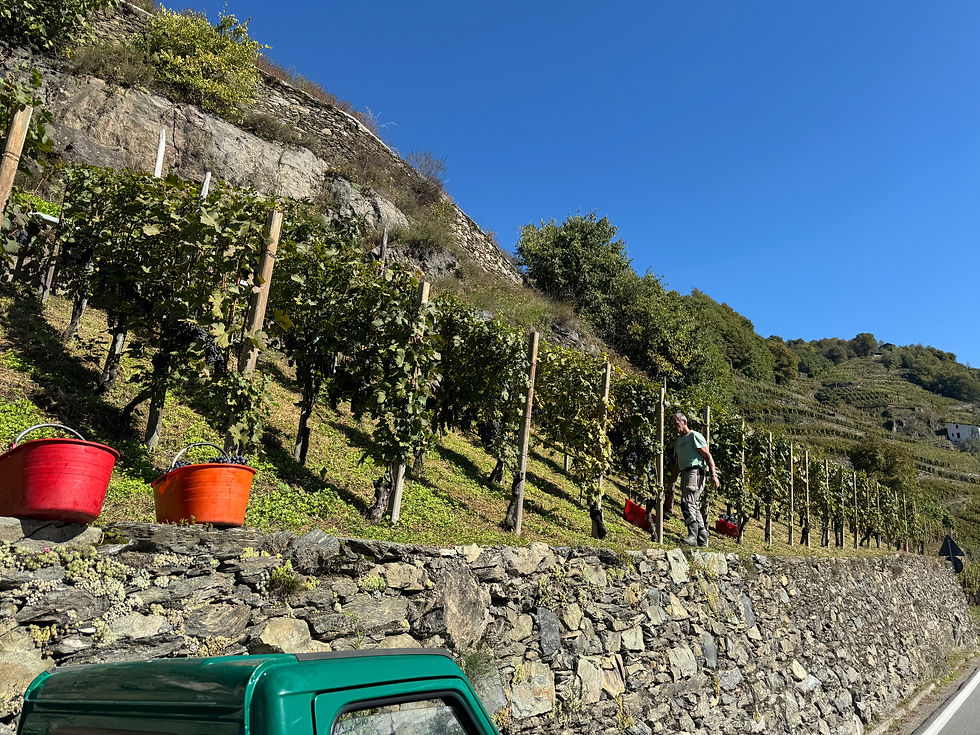
In this mountainous region, terraced stone walls are essential for grape cultivation. The 800-hectare vineyard area includes 2500 kilometers (or 1,550 miles) of such walls. The whole Valtellina region produces approximately 3 million bottles each year. By contrast, Duckhorn's wine portfolio alone produces over 30 million bottles annually!

Where & what to drink
In Valtellina, wine is synonymous with one grape: nebbiolo. This is the very same esteemed grape used to make Barolo. The Valtellinesi (inhabitants of Valtellina) proudly assert that they were producing nebbiolo-based wines well before the Piemontese from Piedmont started. The region's cooler climate results in more a more subtle expression of the grape. Valtellina Superiore holds DOCG status with minimum aging requirements of 2 years with at least one being in wood.
Our tour at Aldo Rainoldi introduced us to the sub-regions within Valtellina ranging from only 25 to 140 hectares. There are five: Maroggia, Sassella, Grumello, Inferno and Valgella each with its own soil type, altitude and geographic location. Traditionally, chestnut, which was plentiful in the region, was the preferred wood for crafting barrels, as shown in the table above made from a repurposed chestnut barrel. Nowadays, winemakers favor oak for their barrels.
Svein and I are big fans of Sandro Fay's wines. We believe they provide remarkable quality for the price, which is an added bonus. Our tour and tasting was with Elena, the daughter of Sandro and 2nd generation.
Sforzato di Valtellina is made by drying grapes through the appassimento technique, the same process used to produce Amarone. This method yields full-bodied wines with high alcohol levels and rich flavors of dark fruit, raisins, cloves, and leather. For 2-4 months, mountain air, assisted by fans, blows over the grapes, causing the liquid to evaporate and concentrate within.

Making its debut in 1897, Nino Negri is another excellent producer. On the steepest vineyards, they utilize heliocopters for transporting the harvested grapes.
"Dirupi" means cliffs or crags, alluding to the steep, extreme pre-alpine mountains in the region. After a long day of picking grapes, the weary workers relied on blasting American music in their cantina to complete the day sorting, de-stemming, and crushing.
Four to try
Aldo Rainoldi- Chiuro
Sandro Fay- San Giacamo di Teglio
Nino Negri- Chiuro
Dirupi- Montagna in Valtellina
Where & what to eat

Bresaola is the cured meat king of Valtellina and no trip to the area would be complete without it. It's often paired with local cheeses like casera or bitto.
Sciatt is a breaded and fried fritter filled with cheese. Versions above are from Trattoria Altavilla and Ristorante al Filò.
Pizzocheri are hearty buckwheat pasta strands usually served with a rich sauce made from local cheese, casera or bitto. Examples from al Filò and Jim.

La süpa sciücia at Trattoria Altavilla is a rich and indulgent type of cheese and onion soup that begs for a high-acid Valtellina nebbiolo to cut through the fat.
Buckwheat also makes an appearance in the region's polenta called taragna. Formaggeria da Silvano, the in-town salumeria of Sondrio, was making a cauldrin of it on the night we dined at the communal table.

Four to try

Ristorante Jim, Hotel Sassella- Grosio
Ristorante al Filò- Bormino
Trattoria Altavilla- Bianzone
Formaggeria da Silvano- Sondrio This is a cheese and cured meat store selling homemade prepared foods mainly for take-out, but Silvano is very friendly so you will likely end up sharing a bottle (or two)!
I would love to hear where your love of wine has taken you!


Comments